How to Prune a Money Tree: A Complete Guide for Healthy Growth
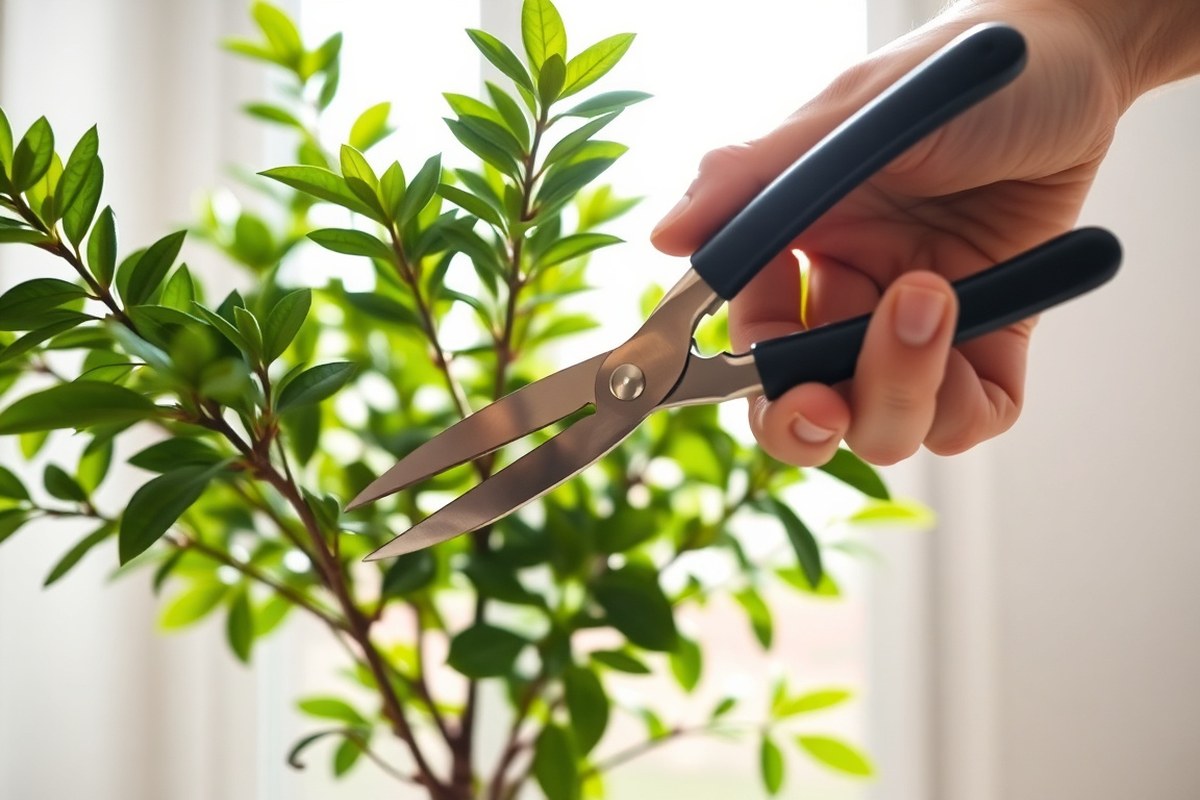
Knowing how to prune a money tree helps keep it healthy and shaped. Use sterilized bypass shears to cut 0.5 to 1.5 cm above a node at a 45-degree angle. Avoid removing more than 20 to 25 percent of the total foliage in one session.
Begin by checking for unhealthy, damaged, or crowded branches to trim. Removing these allows light and air to reach the inner parts of the plant. This practice reduces the risk of pests and diseases developing on the plant.
Pruning at the right angle and position prompts new growth in helpful directions. It stops your money tree from becoming leggy or unbalanced. When the plant is very overgrown, plan to prune over two or three sessions spaced 2 to 3 weeks apart.
Key Takeaways
- Use sterilized bypass shears for clean, precise cuts.
- Trim 0.5 to 1.5 cm above a healthy node, angling the cut at 45 degrees.
- Remove no more than 25% of foliage per pruning session.
- Spread heavy pruning over 2-3 sessions, 2-3 weeks apart.
- Prune in bright, indirect light to help new growth respond.
- Water only when the top 2-4 inches of soil feel dry.
How to Prune a Money Tree Correctly Step-by-Step
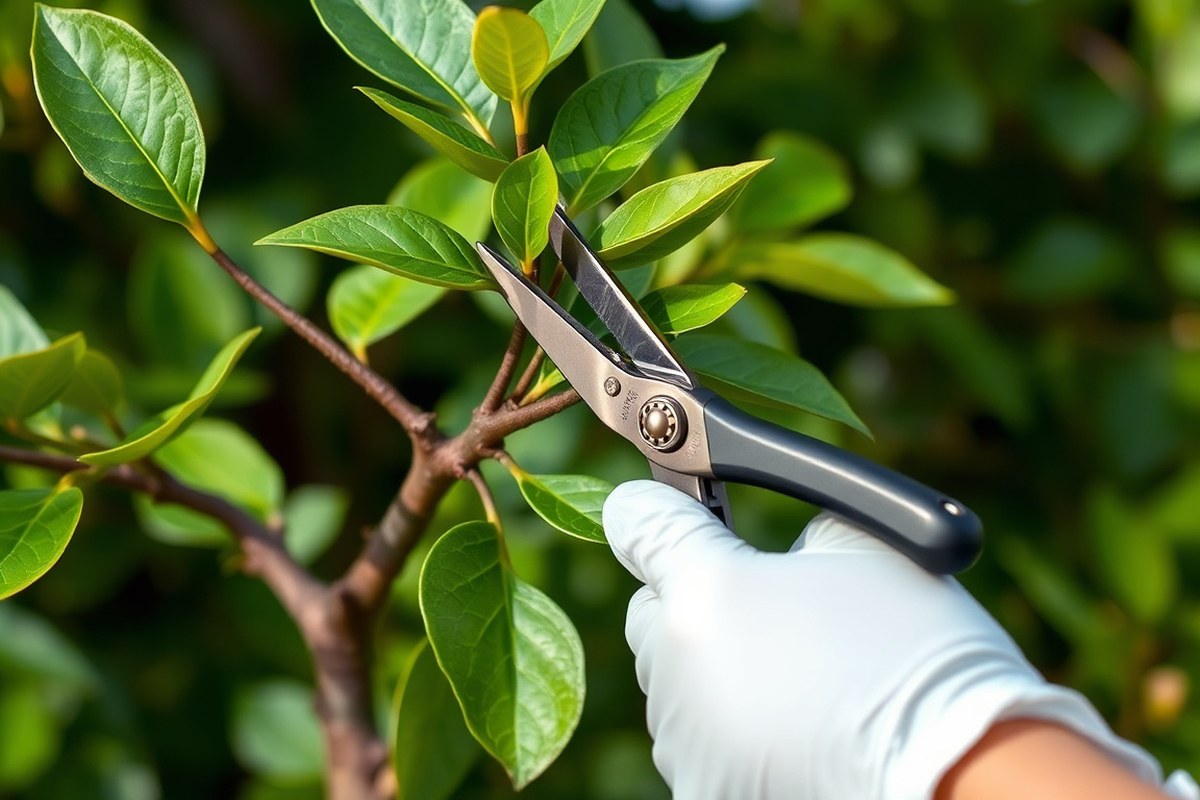
Use clean, sharp shears to prune your money tree. Cut about ⅓ inch above a healthy leaf node. This helps the plant stay healthy and grow well.
Make each cut at a 45-degree angle. Remove no more than 20 to 25% of the foliage at once.
This prevents stress on your money tree. This method helps your plant stay healthy and encourages new growth from the leaf nodes.
Essential Tools and Preparation
Use sterilized bypass pruning shears for clean cuts that protect your money tree from disease. Avoid using blunt tools to prevent crushing or tearing stems. Sterilize shears with rubbing alcohol before and after pruning to keep your plant safe.
Prepare by gathering your shears, rubbing alcohol, and a clean cloth. Wear gloves to protect your hands from sticky sap. Choose a quiet, well-lit area to inspect the tree carefully before cutting.
Identifying Leaf Nodes and Cut Locations
Look for leaf nodes, the small bumps or joints where leaves attach to the stem. These nodes are the best places to cut because new branches grow from them. Avoid cutting too far from a node to prevent slow or no new growth.
Choose healthy, green leaf nodes to cut above, avoiding yellow or dried ones. Plan your cuts evenly around the tree to keep a balanced shape. Cutting just above a node encourages thicker, fuller growth by redirecting energy.
Making Clean, Angled Cuts
Hold your shears at a 45-degree angle when cutting about ⅓ inch above the leaf node. Angled cuts help water run off, reducing the risk of rot. Avoid cutting too close to the node as it can damage the growth point.
Remove no more than 25% of the plant’s foliage in one session to prevent stress. Heavy overgrowth calls for pruning in 2 or 3 sessions.
Space these sessions 2 to 3 weeks apart to help the plant recover. Clean cuts heal faster and reduce infection chances.
Follow these steps for proper money tree pruning:
- Inspect your plant for overgrown or leggy stems and identify healthy leaf nodes.
- Sterilize your pruning shears with rubbing alcohol before use.
- Hold your shears at a 45-degree angle about ⅓ inch above the chosen leaf node.
- Make a clean cut and avoid crushing the stem.
- Rotate the plant and prune evenly around it, maintaining its shape.
- Remove only 20, 25% of the foliage per session to avoid stressing the plant.
- Clean shears after each cut to prevent spreading disease.
When Is the Best Time to Prune Your Money Tree?

Spring and summer are the best times to prune your money tree. During these months, your plant is actively growing and can heal quickly from cuts. You can do light pruning anytime, but heavy trimming works best in spring.
Pruning in winter is not ideal because your money tree’s growth slows down. Cuts made in colder months take longer to heal and may stress the plant. It’s better to avoid major pruning from late fall through winter.
Pruning at the right time helps your money tree stay healthy and full. For example, trimming dead or yellow leaves anytime is okay. But save shaping or size control for when growth picks up after winter.
Here is a simple guide to pruning your money tree. It covers pruning times and what happens during growth. You will learn when to prune and what to expect.
| Season | Best for Pruning | Plant Growth | Recovery Speed |
|---|---|---|---|
| Spring (March to May) | Major pruning and shaping | Active growth | Fast recovery |
| Summer | Light pruning and maintenance | Strong growth | Fast recovery |
| Early Fall (September to October) | Minor pruning and shaping | Moderate growth | Moderate recovery |
| Late Fall to Winter | Avoid heavy pruning | Slow or no growth | Slow recovery |
When you want to reduce size, do it over several seasons instead of all at once. For example, cut down an 8-foot tree to 4 feet gradually to keep stress low. Your tree will grow back fuller and recover faster with this approach.
Never prune heavily during winter; your money tree recovers too slowly and may weaken.
Signs Your Money Tree Needs Pruning
Your money tree needs pruning when you see dead or yellow leaves. Also prune if stems look leggy or branches rub together.
Pruning helps your tree focus energy on healthy growth and avoids problems from overcrowding. Spotting these signs early keeps your plant vibrant and strong.
Dead, Dying, and Diseased Leaves or Branches
Look for leaves turning yellow or brown and branches that feel dry or brittle. These parts waste your plant’s energy and could spread disease.
Cut off dead or yellow leaves right away. This stops harm to the rest of the tree.
Check carefully around the main stem and joints where leaves attach. Remove any branch showing black spots or unusual growths. This pruning step improves air flow and stops pests or fungal infections from spreading.
Identifying Leggy or Overgrown Stems
Leggy stems grow long and bare with leaves spaced far apart. A stem over 12 inches with few leaves or gaps over 2 inches needs pruning. This helps your tree grow fuller and keeps its shape balanced.
A leggy top is common because your money tree stretches toward light. Cutting back tall, sparse stems encourages growth lower down. That prevents your tree from becoming top-heavy or unstable.
Branches Crossing or Rubbing Together
Branches that cross or rub each other cause wounds and invite disease. Find spots where branches clash or overlap and trim one back carefully.
Fix this by making a small cut near the node. The node is where leaves grow.
Removing these interfering branches lets light and air reach inner parts. Your money tree stays healthier and looks neater. Skip this step and the tree could develop black or dead spots.
Signs of Stress and Lack of Growth
Your money tree may need pruning if no new leaves grow after three months. Cutting back older stems shocks the tree into producing fresh growth. It’s a simple way to revive a tired, slow plant.
This is especially useful if the plant is tall but sparse at the bottom. Pruning redistributes nutrients to encourage fuller, lower branches. Check growth every few months to decide if pruning is needed again.
Pruning Checklist for Your Money Tree
- Remove all yellow, brown, or dry leaves
- Trim dead or brittle branches close to the base
- Cut back leggy stems longer than 12 inches with few leaves
- Separate branches that cross or rub
- Prune any diseased areas showing spots or fungus
- Shake off pests and look for signs of insect damage
- Repeat pruning every 3 to 6 months as needed
This routine keeps your money tree healthy and attractive. Checking early and pruning gradually prevents stress. Avoid removing more than one-third of the plant at a time to keep your tree strong.
How to Shape and Control Size When Pruning
To shape your money tree, focus on pruning the stems, not the braided trunk. The braided trunk should stay intact because cutting it can harm the plant. Instead, trim the top and side stems to control height and create a balanced look.
Cut the main stem at the height you want if your money tree is too tall. This method, called topping, encourages branching below the cut. Pruning helps the tree grow bushier in the canopy.
It keeps the plant full. This prevents it from looking stretched out.
Prune stems that lean or grow unevenly to maintain a tidy shape. For example, trim a branch if it hangs heavily on one side. Cut it back a bit.
This balances the plant’s shape. This avoids a lopsided appearance and promotes even growth on all sides.
Money trees can grow 6 to 8 feet tall indoors. But pruning helps keep them shorter if space is tight.
Try to keep the braided trunk at about one-third of the total height. Let the leaves and stems fill the upper two-thirds with a full, rounded top.
Prune your money tree as needed, usually a couple of times per year. Check its shape every few months and cut back any overly long or sparse stems. Regular pruning keeps the tree neat and encourages healthy new growth.
Pruning in Different Situations and Problems
When your money tree outgrows its pot or space, prune its roots and branches carefully. Trim any long branches back by one-third to control size without shocking the plant. This helps the money tree fit comfortably without crowding or tipping over.
For a lopsided money tree, focus on cutting the longer branches on the fuller side. Cut just above a leaf node, so new growth balances the shape.
Avoid removing too much at once. Fix the lopsided look gradually to keep the tree healthy.
Heavily overgrown money trees need light pruning spaced over time. Cut in two or three rounds, each 2 to 3 weeks apart. This approach reduces stress and lets the plant recover slowly, preventing shock and dieback.
- Prune in spring or early summer when growth is strongest
- Use clean, sharp scissors or pruning shears for smooth cuts
- Remove dead or weak branches first before shaping
- Keep at least 50% of the canopy to avoid overwhelming stress
- Water and place the tree in bright, indirect light after pruning
Stress from pruning too much at once might slow growth or cause dieback. Pruning when the plant is healthy and growing is best for quick healing. Clean cuts help wounds close and new shoots to form in the right places.
Don’t cut more than one-third of your money tree’s branches at once to avoid severe shock.
How to Care for Your Money Tree After Pruning
After pruning, water your money tree when the top inch of soil feels dry. Avoid overwatering because the roots need to recover without sitting in wet soil. Keep the plant in bright, indirect sunlight to help leaves grow back strong and healthy.
Humidity levels above 50% encourage good recovery and new growth. You can mist your tree daily to raise humidity. Another way is to set a tray of water with pebbles nearby.
Both methods help increase moisture around the plant. The ideal temperature is between 65°F and 75°F, which suits the money tree’s natural environment.
Feed your money tree every four to six weeks in the growing season. Use a balanced fertilizer diluted as the label suggests. This keeps your tree healthy and growing well.
Use half-strength fertilizer to avoid stressing the plant as it recovers from pruning. This supports new shoots and leaf development without overwhelming the roots.
For bushier growth, pinch off soft new tips with your fingers after pruning. This method encourages the money tree to branch out rather than grow only taller. Continue pinching regularly to maintain a dense and attractive shape over time.
Your money tree might not grow new leaves right away. First, check if it has enough light. Also, make sure you are watering it properly.
Too little light or too much water can slow recovery a lot. Adjust these factors before trying more fertilizer or drastic care changes.
Dip cuttings in IBA rooting hormone with a 0.1 to 0.3% strength. Cover them using a clear plastic bag or a humidity dome to hold moisture. Place the cuttings in bright, indirect light and wait several weeks for roots.
How to Propagate Money Tree Cuttings from Pruning
Propagating money tree cuttings from pruning lets you grow new plants for free. Use healthy stems of about 4 to 6 inches with several leaves. Root the cuttings in moist soil or water until roots appear in 2 to 4 weeks.
Selecting Suitable Cuttings
Choose stems that look healthy and firm without damage or disease. Pick cuttings with about 4 to 6 leaves.
These leaves have enough energy to grow roots. Look for stems with visible nodes, where new roots will form.
Select younger, flexible stems, not old or woody ones. Good cuttings come from branches pruned during the growing season.
Preparing and Planting Cuttings
Trim your cutting just below a node using sharp, clean scissors or pruning shears. Remove leaves from the bottom half of the cutting to prevent rot. Keep 2 or 3 leaves at the top to help photosynthesis.
Plant each cutting in a small pot with well-draining potting mix. Or place it in a jar of clean water.
Use soil and poke a hole first. Insert the cutting carefully without damaging it.
- Cut a 4-6 inch stem just below a node.
- Remove leaves from the bottom half of the stem.
- Optional: Dip the cut end in rooting hormone to speed rooting.
- Insert the cutting into moist potting soil or water.
- Place the pot in bright, indirect light.
- Keep the soil moist but not soggy.
- Watch for roots in 2 to 4 weeks.
- Transplant to a bigger pot once roots are strong.
Caring for New Cuttings
Put cuttings in a spot with bright indirect light for at least 6 hours daily. Keep humidity high around cuttings by covering them with a plastic bag or using a propagator. Water when the top 2 to 3 inches of soil feels dry to the touch.
Avoid direct sun, which can scorch young leaves and harm root development. Roots usually show up within 2 to 4 weeks. Then move cuttings to regular pots.
Common Money Tree Pruning Mistakes and How to Avoid Them
Cutting off too much at once causes stress and slows regrowth. Experts suggest trimming no more than 20 to 25 percent of foliage in one session. Taking off more can shock your money tree and lead to slow recovery or leaf drop.
Using dirty or dull tools is another frequent mistake. These can harm the plant and invite diseases, making your tree vulnerable to infections. Always sterilize pruning shears and keep blades sharp to get clean cuts that heal quickly.
Legginess happens when your tree stretches toward light with long, thin stems and sparse leaves. This weakens the plant’s structure and looks unhealthy. To fix this, prune back those leggy stems carefully, encouraging fuller, bushier growth nearby.
- Don’t remove more than 25% of the foliage at once.
- Keep pruning tools clean and sharp to prevent damage.
- Trim leggy stems to encourage denser leaf growth.
- Cut just above a leaf node to help new growth.
- Prune gradually over multiple sessions instead of all at once.
Prune gently by cutting slightly above a leaf node, where new shoots emerge. This directs your money tree’s energy to healthy growth spots. Avoid tearing or crushing stems, as this slows healing and invites pests.
Never prune more than a quarter of the leaves at once. Doing too much at once can stress your money tree. Keep each pruning session small and gentle on the plant.
Pruning is a balance. Too little, and legginess persists; too much, and the tree weakens.
Spread pruning out over time, watching for strong new shoots before the next cut. This routine helps keep your money tree healthy and attractive.
Step-by-Step Action Plan to Prune Your Money Tree
Follow these clear steps to prune your money tree effectively. Each step helps keep the plant healthy and promotes new growth.
- Before You Start: Gather clean, sharp pruning shears and disinfect them. This prevents infection when cutting your money tree.
- Early Spring: Check for dead or yellow leaves and trim them off. Healthy new leaves should start appearing soon after.
- Day 1: Cut back long branches to shape the tree. Look for evenly spaced cuts to keep it balanced.
- Week 1: Remove any shoots growing inward toward the center. This opens space for air and light, which the plant needs.
- After 2 Weeks: Inspect cuts for new buds or growth. If none appear, check if pruning was too severe or timing was off.
- Monthly: Monitor overall size and trim any branches growing too tall or wide. This helps control shape without stressing the tree.
- After Pruning: Water your money tree lightly and keep it in bright, indirect light. Watch for signs of stress like droopy leaves.
- After 1 Month: Try rooting healthy cuttings in water or soil. New roots mean successful propagation from your pruning.
Frequently Asked Questions
Can I Prune My Money Tree If It’s Not Actively Growing?
It’s best to avoid pruning a money tree during dormancy. Pruning when growth slows can stress the plant and slow recovery.
How Do I Know If My Pruning Tools Are Clean Enough?
Use rubbing alcohol or a bleach solution to sterilize your shears. Clean tools help prevent infections and disease in your money tree.
Is It Okay to Prune My Money Tree Indoors or Should I Move It Outside?
You can safely prune your money tree indoors where you control conditions. Avoid drafts or extreme temps that might stress it.
Should I Remove Yellow Leaves During Pruning or Leave Them On?
Remove yellow or damaged leaves during pruning to keep the tree healthy. Dead leaves can attract pests and reduce growth.
Can Pruning Cause My Money Tree to Stop Growing Temporarily?
Yes, pruning can slow growth briefly while the plant heals its cuts. Expect new growth in a few weeks after pruning.
How Deep Should Cuts Be When Pruning Thick Stems?
Cut through thick stems gradually over multiple sessions. Deep cuts all at once can shock your money tree.
Wrapping Up
Pruning your money tree keeps it healthy and looking its best. Start with small cuts and watch for fresh growth. Grab your shears and get pruning today.