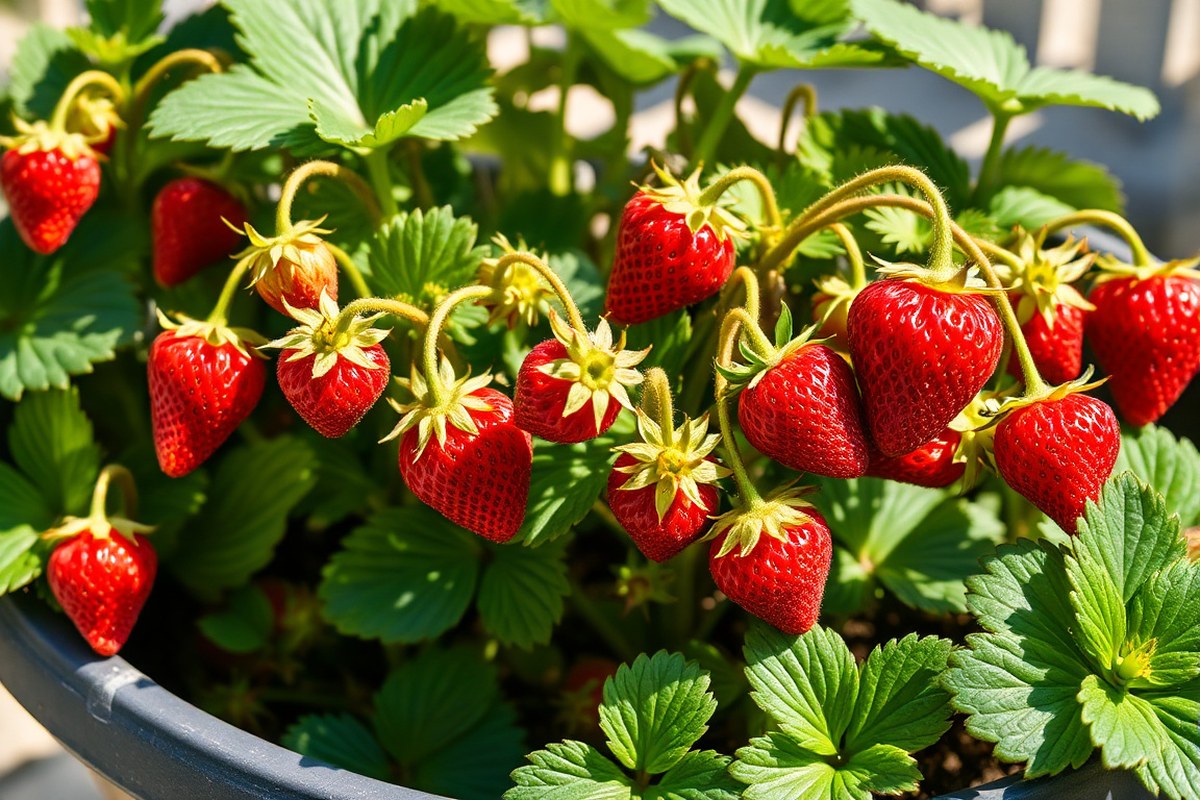
How to Plant and Grow Strawberries in Containers: Complete Guide for High Yields
How to plant and grow strawberries in containers starts with choosing the right size pot. Use containers at least 12 inches deep and wide per plant to give roots enough room. This helps strawberries grow strong and produce more fruit.
Next, pick good soil that drains well and holds moisture. Put the container in a spot with at least six hours of sun. Full sun every day helps strawberries grow their best.
Check the spot for sun before placing your container there. Watch out for pots without drainage holes, they can cause root rot.
Space plants about 10 to 12 inches apart to avoid crowding. Soak bare-root plants’ roots in water for 30 minutes before planting.
This step helps prepare the roots for better growth in soil. This step wakes up the roots and boosts their chance to thrive.
Key Takeaways
- Use containers at least 12 inches deep and wide per strawberry plant.
- Choose well-draining soil that keeps moisture but doesn’t stay soggy.
- Place containers where plants get at least six hours of full sun daily.
- Make sure containers have drainage holes to prevent water buildup.
- Spacing plants 10 to 12 inches apart avoids crowding and disease.
- Soak bare-root strawberry plants in water for 30 minutes before planting.
How to Plant Strawberries Successfully in Containers
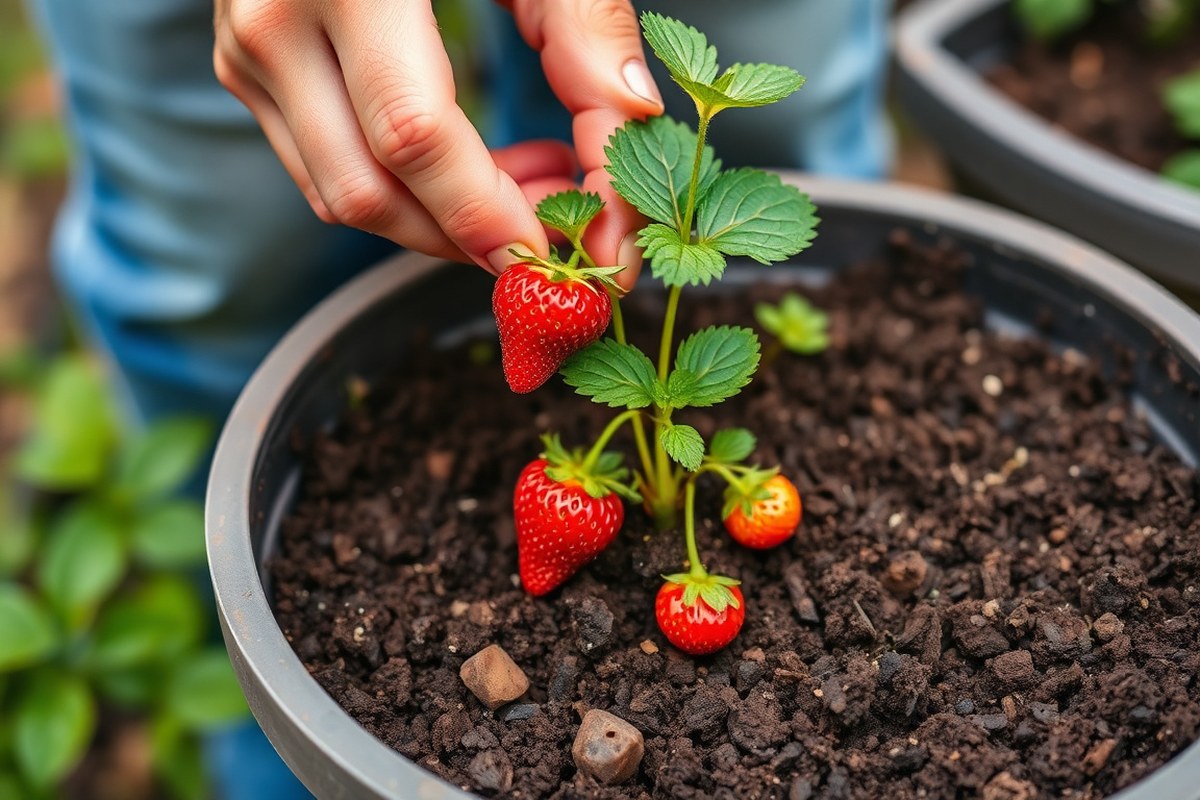
Planting strawberries in containers needs proper steps to set them up right. You must pick the right container size for your strawberries. Prep the soil well before planting.
Care for the plants after you put them in the container. Soaking bare-root plants before planting helps them absorb moisture and settle well in soil.
Follow these steps to start your container strawberries successfully:
- Soak bare-root plants for 1 to 2 hours in lukewarm water. This helps revive roots and boosts early growth.
- Choose containers at least 12 inches (30 cm) deep and wide for each strawberry plant. This size lets roots grow 6 to 12 inches deep.
- Fill containers with loose, well-draining potting soil made for fruits or vegetables. Avoid heavy garden soil that holds too much water.
- Plant strawberries so the crown sits barely above soil surface. Crowns buried too deep or too high can cause rot or drying.
- Space plants about 6 to 8 inches apart inside wider containers. This gives enough air circulation and room for runners.
- Water newly planted strawberries until soil is moist but not soggy. Keep soil evenly moist during the first weeks, never letting plants dry out.
- Place containers in full sun with 6 or more hours of direct sunlight daily. Strawberries need plenty of light to fruit well.
- Check soil moisture daily and water regularly, especially in warmer weather. Containers dry out faster than garden beds.
Plant so crowns can breathe and roots can spread easily. This leads to healthy leaves. Later, you’ll get juicy fruit.
Crowns sunk too deep or soil too wet lead to rot and weak plants. Using the right pot size and soil also cuts down risks of disease and water stress. You can expect green, growing plants within weeks and flowers in about a month after planting.
Choosing the Ideal Container and Soil for Strawberries
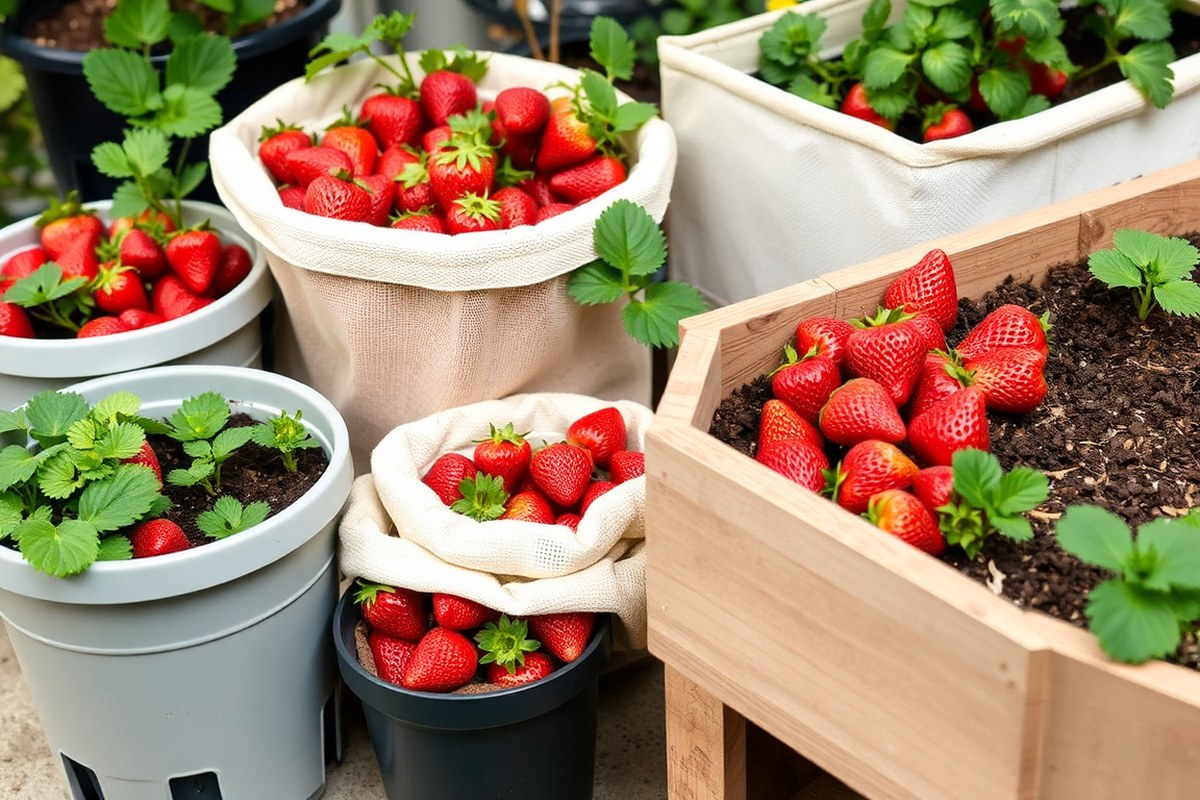
Pick a container at least 10 to 12 inches wide and 8 inches deep. This size holds enough soil to keep roots moist and healthy. A light-colored plastic pot works well because it keeps the soil cooler on sunny days.
Drainage holes are a must to stop water from pooling at the bottom. Without these, roots might rot or plants will suffer from overwatering. Make sure your container sits on something that lets water escape freely.
| Aspect | Recommendation | Reason |
|---|---|---|
| Container Depth | 8 to 12 inches | Enough space for healthy root growth |
| Container Width | 10 to 14 inches | Allows room for several plants or runners |
| Material | Light-colored plastic or ceramic | Keeps roots cool and soil stable |
| Drainage | Multiple holes, raised base recommended | Prevents root rot and soil saturation |
| Potting Mix | Peat-free, pH 5.5 to 6.5 | Ideal acidity for strawberry nutrient uptake |
| Soil Type | Well-draining, rich in organic matter | Supports steady moisture without waterlogging |
Use a peat-free potting mix with a pH between 5.5 and 6.5 for best growth. This slightly acidic soil matches strawberries’ natural preferences. The mix should drain fast but still hold moisture well enough to feed the plants.
You can buy a high-quality commercial mix designed for fruits and vegetables. You can make your own mix by blending equal parts compost. Add coarse sand and peat-free potting soil too.
Mix them all well before planting. This blend ensures nutrients and good airflow around the roots.
Regularly check drainage holes to prevent water buildup that can kill roots.
Plants in small containers dry out faster than those in a garden bed. So, plan to water and feed them often. Always use fresh soil when repotting your plants.
This keeps them healthy. It also helps prevent diseases from old soil buildup.
Best Strawberry Varieties and Plant Spacing for Containers
Strawberries grow best in containers when you pick day-neutral or everbearing types. These varieties produce fruit over a long season and handle the limited root space well. Spacing depends on your container size.
Usually, space plants 6 to 12 inches apart. This helps with good airflow and fruiting.
Recommended Everbearing and Day-Neutral Varieties
Day-neutral and everbearing strawberries keep producing from late spring through fall. Their manageable size makes them better for pots than June-bearing types that need more space. You can expect to harvest strawberries 2 to 3 times weekly with the right care.
Popular everbearing varieties include Albion, Quinault, and Seascape. These types stay compact and keep fruiting steadily. Nearly all day-neutral types thrive in well-draining soil and full sun when grown in containers.
- Albion: large, sweet berries, good disease resistance
- Quinault: firm berries, consistent fruiting
- Seascape: flavorful berries, vigorous growth
- Tristar: adaptable and tolerant of different conditions
- Sweet Charlie: early season fruit, good for smaller pots
Choosing these varieties helps you enjoy multiple harvests without crowded root systems. They suit containers from small pots to larger troughs.
Spacing Guidelines by Container Size
Plants need enough room for roots, airflow, and fruit to develop. Crowding leads to poor airflow and more disease risk. For small pots around 8 inches deep, space plants 6 to 8 inches apart.
In larger containers or troughs, plant crowns 8 to 12 inches apart. A 12-inch diameter pot fits about one strawberry plant for compact types. Bigger containers hold three or four plants.
They need at least 12-15 inches deep. The width should be about 12 inches.
- 6 to 8 inches apart in small containers
- 8 to 12 inches apart in larger troughs
- One plant per 12-inch pot for compact types
- Three or four plants in a 12-inch wide, 12-15-inch deep container
- Leave room for runners or trim them to maintain space
Following these spacing rules lets plants breathe and produce more fruit. Overcrowding is a common mistake that slows growth and harvest.
Planting Bare-Root vs Potted Plants
Bare-root plants spread roots quickly once in soil. Give them space to establish and avoid burying the crown too deep. This helps strawberries start strong and grow evenly in your container.
Potted plants already have root balls. So handle them gently and plant at the same soil level.
Their established roots mean you can space them a little tighter if needed. Avoid packing too many plants together to prevent moisture and disease problems.
Both types need sufficient pot depth, about 8 to 10 inches for root growth. Water well after planting and keep the soil moist, not soggy.
Sunlight, Watering, and Fertilizing Container Strawberries
Strawberries grown in containers need direct sun for 6 to 8 hours daily. Choose a bright spot, like a balcony facing south or a sunny patio corner. Without enough light, plants stay weak and produce fewer berries.
Water container strawberries regularly because they dry out faster than garden beds. Check soil moisture daily by sticking your finger about an inch deep.
Water when it feels dry. Aim for consistent dampness, not soggy soil, to keep roots healthy and prevent wilt.
Fertilize container strawberries every 3 to 4 weeks during the growing season. Use a balanced fertilizer with equal parts nitrogen, phosphorus, and potassium or one labeled for fruits. Feeding supplies extra nutrients your plants need to grow strong and produce sweet berries.
Fresh water and good sunlight boost strawberry growth clearly. Avoid overwatering, which can cause root rot or mold.
Leaves turning yellow or no fruit means you should check water and fertilizer. Make sure you water enough without overdoing it and use fertilizer as directed.
In cooler seasons or shaded areas, strawberries might need less water but still require sunlight. Adjust watering based on temperature and how fast the soil dries. Using a container with drainage holes helps prevent water buildup.
Place your container somewhere it gets 6 to 8 hours of sun daily. Water only when the soil is dry about 1 inch down. Feed plants every 3 to 4 weeks with balanced fertilizer.
Watch how your strawberry plants react; healthy leaves are dark green. Berries should appear plump and shiny.
Controlling Pests and Diseases in Strawberry Containers
Pests like aphids, spider mites, and vine weevils often attack strawberries in containers. You can spot aphids as tiny green or black bugs clustering on new growth.
Spider mites leave fine webs and cause leaves to look speckled or dry. Vine weevils hide near the soil and can chew roots, which weakens your plants.
Spotting diseases early saves your strawberries. Common problems include powdery mildew. It looks like white powder.
Gray mold causes soft, fuzzy spots on fruit. Watch for yellowing leaves or unusual spots, as these often mean infections start. Keeping plants healthy with proper watering and air flow reduces these risks.
- Use an insecticidal soap spray to control aphids and mites.
- Remove and discard any infected leaves to stop disease spread.
- Keep soil consistently moist but not soggy to prevent root rot.
- Move containers to a sunny, airy spot to reduce fungal growth.
- Inspect plants weekly to catch problems early before they worsen.
Water only at the base to avoid wetting leaves, which spreads fungus. Replacing the potting mix yearly also helps, as pests and diseases build up over time.
Organic options like neem oil help control some pests. It does not harm beneficial insects or fruit.
Never reuse soil from old strawberry containers without sterilizing it first. Pests and diseases hide there.
Check your plants often, especially under leaves and around stems. Removing runners can also reduce crowding, which lowers disease chances. Taking steps early helps keep your strawberries healthy and productive all season long.
Harvesting Strawberries and Maximizing Yield in Containers
Strawberries are ready to pick when they turn bright red all over. Check your container plants every two to three days during harvest season.
The fruit does not ripen once picked. So wait until they are fully red for the best taste.
To harvest without hurting the plant, pinch or cut the stem just above the berry. Avoid pulling the fruit off, or you might damage leaves or stems. Use small scissors or garden snips if the stems are tough to pinch by hand.
Picking ripe berries often helps your plants produce more fruit. Removing old berries prevents rot and pests in the container.
You can remove small or weak new plants. This helps strong plants grow better.
After your first harvest, feed strawberries every 4 to 6 weeks. Use balanced fertilizer to help.
This gives your plants the nutrients they need to keep flowering and fruiting. Avoid soggy soil by watering just enough to keep the soil moist but not wet.
Let your strawberries flower and fruit in the first year to build healthy plants. Removing flowers early on may help runners but reduces fruit yield. For container strawberries, it’s usually better to focus on fruit in year one.
Look for fully red berries with no white or green tips before picking. Picking too early leads to bland flavor because strawberries don’t keep sweetening after harvest.
Ripe berries left too long may rot. They can also attract bugs.
Pruning, Runners, and Seasonal Care for Container Strawberries
To keep container strawberries productive, regularly prune runners and old leaves. Remove runners because they drain energy without rooting well in pots. Seasonal care includes cleaning, fertilizing, and refreshing plants to encourage fruit all year.
Pruning and Runner Management
Runners grow long stems with new baby plants. In containers, these babies usually can’t root properly outside the pot. That means runners only weaken your main plant by using up its energy.
Cutting off runners keeps the strawberry plant focused on producing fruit. Look for long, thin stems growing from the main plant. Snip them off close to the stem with sharp scissors every two weeks during growing season.
Pull away dead or yellow leaves to improve air flow and reduce disease risk. Removing old leaves also helps new leaves get more light.
Replacing or Refreshing Plants
Strawberry plants in containers usually stay productive for two to three years. After that, yield drops and older plants get woody and less healthy. It’s best to replace them or refresh by taking runners that root inside the container.
To refresh, choose the strongest runner rooted in the soil. Cut it free from the parent plant and treat it like a new plant. This keeps your container full and productive without buying new plants.
Remove plants completely when they are too old or too crowded. Replant with fresh strawberry starts following soil and spacing guidelines.
Seasonal Fertilizing and Cleaning
Keeping your plants fed is key to long-term fruiting. Use a fertilizer high in potassium, which helps flowers and fruit develop.
Feed your strawberries every four weeks during the growing season. Use a balanced fertilizer with a high potash content.
In late fall, clean up dead leaves and debris to prevent pests and diseases in winter. Cut back leaf litter and wipe down containers. Strawberries benefit from some winter protection like mulching or moving containers indoors if it freezes.
- Check your plants every two weeks during spring and summer.
- Snip off all strawberry runners close to the main plant.
- Remove any dead or yellow leaves to improve airflow.
- Inspect runners rooted in soil and separate the strongest ones.
- Cut these runners free and replant to refresh your container.
- Feed your plants with a high-potassium fertilizer once a month.
- Clean up dead leaves and debris in fall to prevent pests.
- Add winter protection, like mulch or moving containers indoors.
Overwintering Container Strawberries and Year-Round Growing Tips
To protect container strawberries in cold climates, bury the pots outside. Cover them with insulation like straw to keep warmth in. This stops freezing damage.
You can also bring containers inside to use natural light or grow lights for year-round growing. Picking cold-hardy varieties and adjusting care by season helps keep strawberries fruitful longer.
Outdoor Winter Protection Techniques
Dig a hole in your garden or yard. Bury the strawberry containers up to the rim. This keeps roots safer from frost.
Cover the top with at least 6 inches of straw or mulch. This shields roots from freezing temperatures.
Mulch also keeps soil moist. This method keeps roots warmer than air temperature, reducing frost damage risks.
Place containers close to your house or under a porch roof. This spot offers more warmth and blocks strong wind. It helps strawberries survive cold days.
Avoid wet spots where water can freeze and harm plant crowns. Remove the mulch in early spring to let sunlight reach the plants and start growth again.
This method usually costs little besides buying straw and your effort. You do need a garden spot with soil to dig into. It’s a low-cost way to protect plants.
It works best in USDA zones where winters drop below freezing but stay somewhat moderate. In harsher zones, extra insulation or indoor wintering will be necessary.
Indoor Growing Requirements
Place strawberry containers near the brightest south-facing window you have for best natural light. Try to provide 12 to 16 hours of light each day. Use LED grow lights if sunlight is weak or unavailable.
This helps strawberries grow indoors. This encourages steady growth and flowering through winter.
Keep indoor temperatures between 60 and 70 degrees Fahrenheit. Cooler temps slow strawberry growth, warmer temps stress the plants. Aim for that range to stay healthy.
Water sparingly but do not let soil dry out completely. High humidity near plants helps keep leaves healthy indoors.
Using a quality potting soil mix with good drainage lets roots breathe and avoids rot. You might supplement strawberries with other container veggies indoors to share light and soil setups. Avoid crowded spaces with poor airflow to prevent mold and pests.
Don’t rely solely on window light in winter. Use a timer-controlled grow light for consistent strawberry growth.
Choosing Varieties for Year-Round Production
Pick everbearing or day-neutral strawberry types for your containers to get fruit multiple times a year. These varieties flower in spring and again through fall, even in shorter daylight hours. Some common everbearing types include ‘Seascape’ or ‘Albion.’
In cold areas, buy strawberry plants rated 2 USDA zones harder than your zone. This gives them a better chance to survive winter. Choose plants built for colder climates.
These handle cooler soil without dying back completely. You can still bring containers indoors during freezing spells to help protect them.
Without proper winter care, strawberry plants may go fully dormant or lose leaves. With the right variety and conditions, you can extend harvests well beyond summer months. Adjusting fertilizer and pruning around seasonal changes also boosts overall yields.
Step-by-Step Action Plan for Growing Strawberries in Containers
Follow these steps to start your container strawberries right away. This plan helps you see solid progress in the first month.
- Before you start: Choose a container with drainage holes that is at least 12 inches wide. Use fresh, well-draining potting mix. Check that drainage works by watering once.
- Day 1: Plant your strawberry crowns so roots spread gently. Keep crowns just above soil. Water lightly and see soil stay moist but not soggy.
- Week 1: Place the container where it gets 6 to 8 hours of sunlight daily. Watch how sunlight hits your plants to ensure good exposure.
- Week 2: Start watering every 2 to 3 days, adjusting for weather. Check soil moisture by touching top inch; it should feel damp, not wet.
- Week 3: Apply a balanced fertilizer formulated for strawberries. Use the recommended amount on the label. Note new leaf growth within a week.
- Month 1: Watch for flowers; pinch off any runners to focus energy on fruit. Healthy flowers without runners show your care works.
- Ongoing: Inspect the plants weekly for pests or diseases. Use safe treatments if you spot issues early to keep plants healthy.
Frequently Asked Questions
Can I Grow Strawberries in Hanging Baskets?
Yes, strawberries grow well in hanging baskets with proper soil and watering. Hang baskets where they get full sun for best fruit production.
How Often Should I Repot Container Strawberries?
Repot strawberries every 1 to 2 years to refresh soil and roots. Use fresh potting mix and a slightly larger container for healthy growth.
Can I Grow Strawberries Indoors Without Sunlight?
Strawberries need at least 6 hours of sunlight daily. Without sun, use grow lights to keep plants healthy and fruiting indoors.
What Temperature Is Best for Strawberry Plants in Containers?
Strawberries grow best between 60°F and 80°F. Avoid extreme heat or frost, which can stress the plants and reduce yields.
Do Container Strawberries Need Extra Fertilizer?
Yes, feed container strawberries monthly with balanced fertilizer. Containers lose nutrients faster than garden soil, so regular feeding helps fruit production.
Can Strawberries Grow in Small Containers?
Strawberries can grow in containers as small as 10-12 inches wide. Each plant needs about 12 inches of space to spread roots and runners well.
Key Points to Remember
Growing strawberries in containers takes attention but can be very rewarding. Start with good soil, sunlight, and steady care.
Your next step is to pick your container. Set up your spot with fresh soil today.
2 Comments