How Much Soil Do Tomatoes Need: A Complete Guide with Proven Volume Tips
Wondering how much soil do tomatoes need to grow well? Tomato plants need at least 5 gallons of soil to thrive. This amount holds enough water and nutrients to support healthy roots and steady growth.
Different tomato types need various container sizes. Vining tomatoes require bigger pots, while bush varieties do fine in smaller ones. Starting with the right soil volume helps prevent common problems like drying out or nutrient shortages.
A tomato’s root system spreads wide and deep. Usually, roots go down 12 to 24 inches, so soil depth matters. Using a soil mix that drains well prevents waterlogging and root diseases.
Also, wait until the soil warms to about 60°F before planting tomatoes outdoors. This encourages faster root growth and better overall health. Keeping the soil moist is important in the early stages.
Avoid soaking it too much. This helps roots grow strong.
Key Takeaways
- Allow at least 5 gallons of soil per tomato plant for healthy growth.
- Use 20 gallons of soil in 24-inch wide containers for vining tomatoes.
- Bush tomatoes grow well in 18-inch wide, 12, 18 inch deep pots.
- Plant tomatoes only after nighttime temperatures stay above 55°F.
- Keep soil moist but not soggy until seedlings sprout.
- Use soil that drains well but holds moisture evenly.
How Much Soil Does a Tomato Plant Need to Thrive?
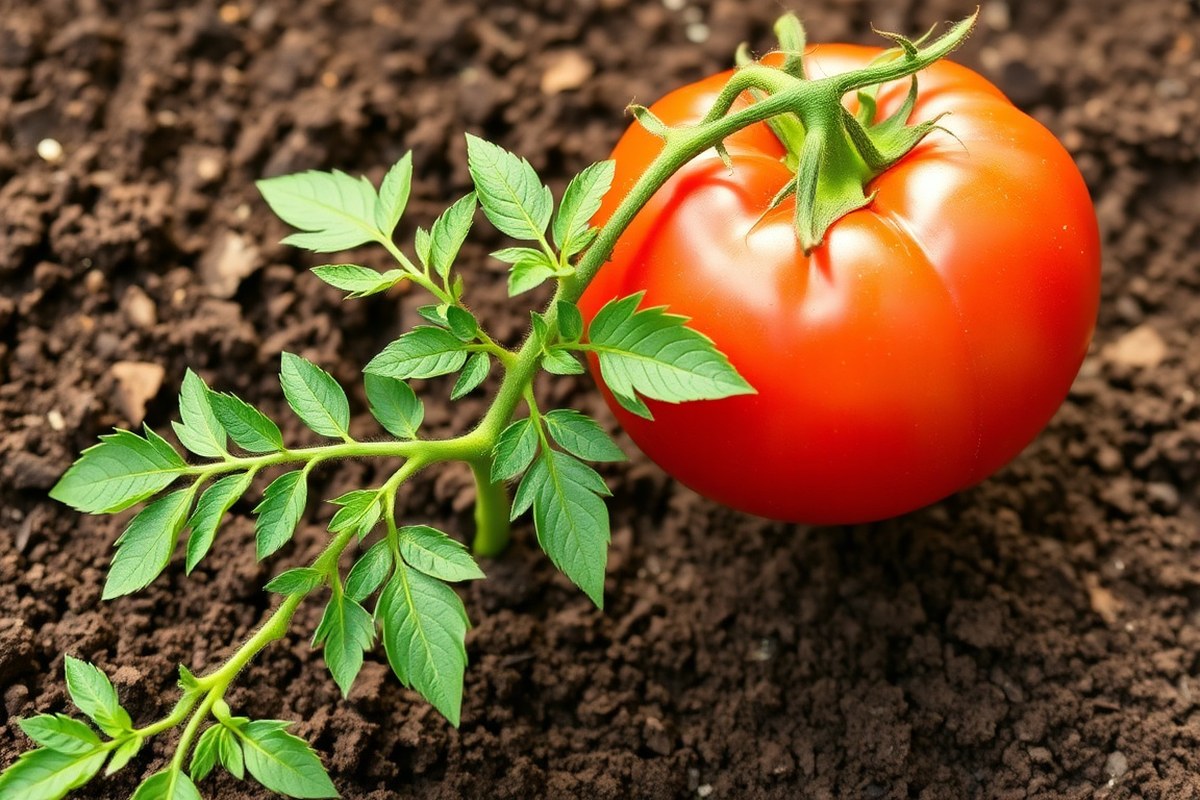
Tomato plants need at least 5 gallons of soil to grow well. This volume gives roots enough space to spread and absorb water and nutrients. Most tomato types need 12 to 18 inches of soil in containers or rows.
This depth helps roots grow well. It works for many garden setups.
Indeterminate tomatoes, which vine and grow larger, require more soil. They need containers with about 20 gallons and 24 inches depth for best results. Determinate or dwarf tomatoes grow well in smaller containers.
Use 5 to 10 gallons of soil in these pots. The soil depth can be shallower for these types.
| Tomato Variety | Minimum Soil Volume | Minimum Soil Depth |
|---|---|---|
| Indeterminate (vining) | 20 gallons or more | 24 inches |
| Determinate (bush type) | 10 gallons | 18 inches |
| Dwarf tomato varieties | 5 gallons | 12 inches |
Plant your tomato so at least 1 inch of stem is buried in soil. Tomatoes can grow roots along submerged stems. This helps stabilize the plant and improves nutrient uptake.
Soil volume matters because tomatoes need steady nutrients and moisture. Containers smaller than 5 gallons need more watering and feeding. This can be hard to manage long term.
Smaller pots dry out quickly. Larger soil volume buffers plants against dry spells and nutrient dips.
For garden rows, dig 12 to 18 inches deep to offer enough root space. This depth suits most soil types and tomato varieties. Keep soil loose and aerated to help roots grow deep.
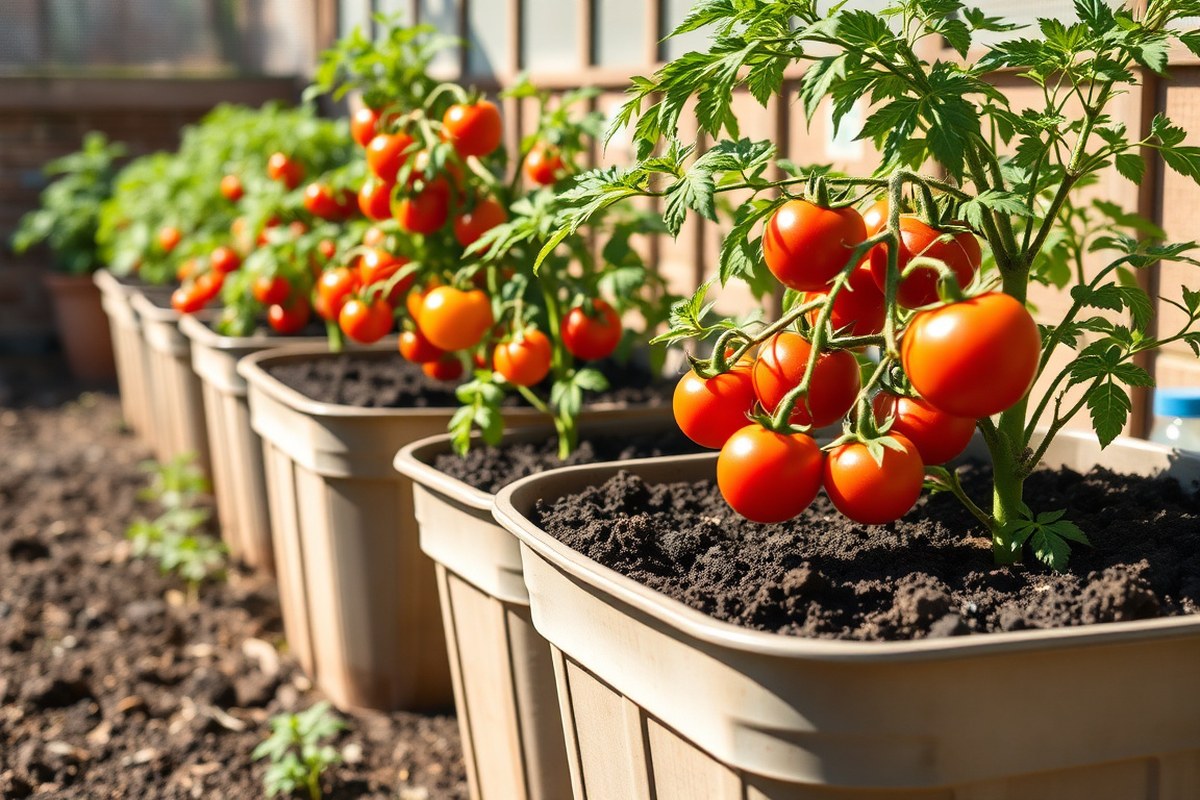
When growing tomatoes in containers, pick pots at least 18 inches deep. Bigger pots with 20+ gallons work especially well for vining types. Use good-quality potting soil and add fertilizer regularly since containers lose nutrients faster.
Choosing soil volume depends on your tomato type and space. Smaller plants do fine in 5 gallons. But bigger vines need 20 gallons or more.
Plant roots plus an extra inch of stem under the soil. This helps roots grow strong and steady. It also makes plants more stable.
Choosing the Right Container Size Based on Plant Type
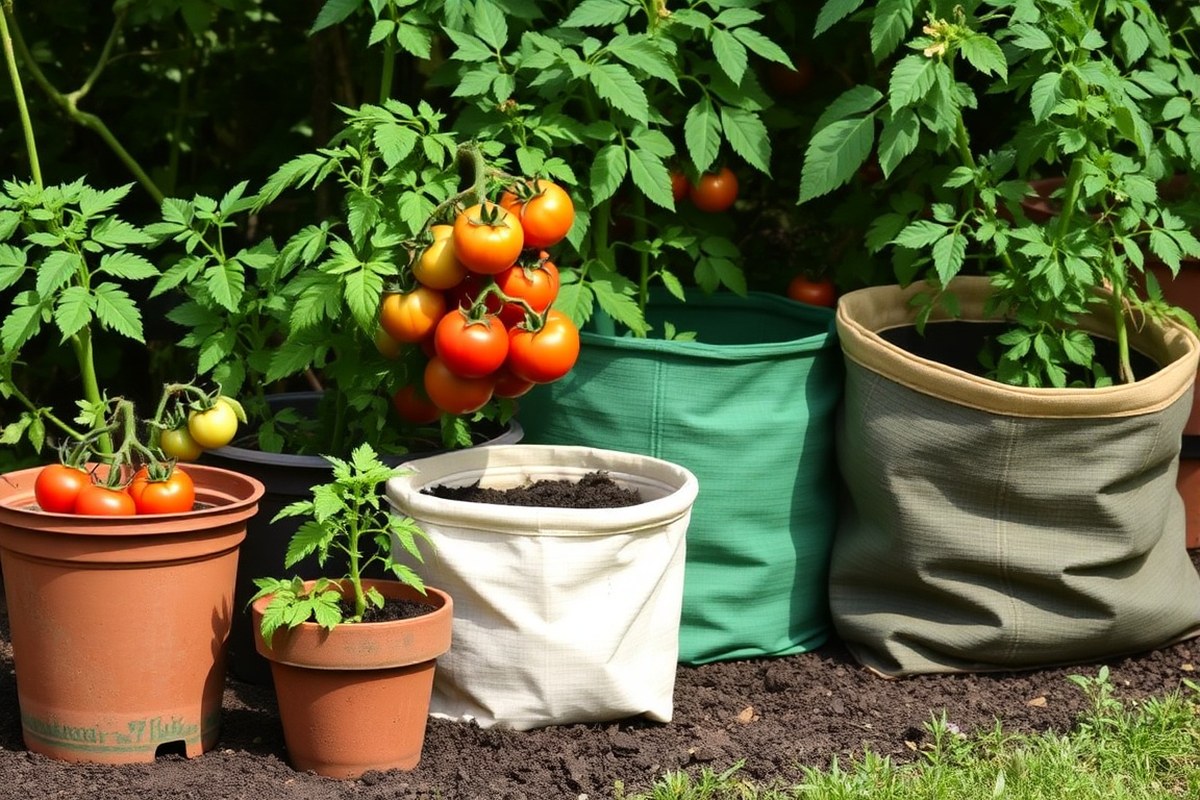
You need to pick container sizes based on your tomato type. Determinate tomatoes need smaller pots than indeterminate ones. Cherry tomatoes can do well in smaller containers with proper care.
Determinate Tomato Container Sizes
Determinate tomatoes grow as bushy plants with a limited height. Their containers should be around 18 inches wide and 12 to 18 inches deep. A pot holding 5 to 10 gallons of soil works well.
This size fits most types of tomatoes. It provides enough room for roots to grow.
These tomatoes stop growing after reaching maturity, so a smaller root area is fine. Using a tomato cage helps support their compact stems. Determinate varieties include Roma, Celebrity, and Patio types.
Indeterminate Tomato Container Sizes
Indeterminate tomatoes grow and make fruit all season. They need large containers to hold their roots and vines. Use pots about 24 inches wide and at least 20 gallons of soil.
These large pots provide enough room for deep root expansion. They also help keep the soil moist longer, which indeterminate tomatoes need. Use tall stakes or large cages for these tall, vining tomatoes.
Special Cases: Cherry and Patio Varieties
Cherry tomatoes usually grow smaller vines and can thrive in pots around 5 gallons. A 12-inch wide and deep container lets cherry plants develop well. These varieties don’t take up much space, making them good for balconies.
Patio or dwarf varieties fit well in slightly larger pots, about 5 to 10 gallons. They combine the bushy growth of determinate types with a smaller size. These tomatoes suit container gardeners with limited space.
| Tomato Type | Container Width | Container Depth | Soil Volume | Plant Growth Habit |
|---|---|---|---|---|
| Determinate (Roma, Celebrity) | 18 inches | 12-18 inches | 5-10 gallons | Bushy, compact |
| Indeterminate (Heirloom, Vining types) | 24 inches | 24 inches or more | 20 gallons or more | Tall, vining |
| Cherry Tomatoes | 12 inches | 12 inches | 5 gallons | Small vines |
| Patio or Dwarf | 18 inches | 12-18 inches | 5-10 gallons | Bushy, small |
This container guide helps you avoid common mistakes like choosing too small pots for vining tomatoes. Bigger pots also retain soil moisture better, reducing stress on the plants. Adjust pot size if you want multiple plants in one container.
Avoid pots smaller than 5 gallons for any tomato. Small pots can stunt root growth. This leads to fewer and smaller fruits.
How Planting Depth and Root Growth Affect Soil Needs
Planting depth and root growth shape how much soil tomatoes need. Tomatoes root deeply, so the soil must be deep and loose. Plant seedlings deep to encourage stronger roots along the stem.
Proper Seedling Planting Depth
Tomato seedlings should be planted deep to boost root growth. Plant seedlings deep, up to the first true leaves. This helps roots grow along the stem.
It gives plants more support and nutrients. This method helps produce a strong, supportive root system for the plant.
Here is a simple checklist to plant your tomato seedlings properly and safely.
- Use a trowel to dig a hole twice the size of the seedling’s root ball.
- Place the seedling in the hole so the soil covers up to the first true leaf.
- Fill the hole halfway with soil; firm gently around the stem.
- Finish filling the hole and press soil firmly but gently to remove air pockets.
- Water the plant thoroughly to settle the soil around roots.
- Mulch around the base with 1-2 inches of organic matter to keep moisture in.
Typical Root Growth Patterns
Tomato roots start shallow but develop deep and wide over the season. Seedling roots reach about 6-8 inches deep after a few weeks. Mature plants can develop roots up to 24 inches deep.
Root growth spreads wide as well; roots often extend beyond the plant’s foliage. This deep and broad root system helps tomatoes absorb water and nutrients well. Roots need enough soil volume to avoid crowding and stress.
Providing room for this root growth helps plants grow stronger and produce more fruit. Roots grow best in loose, well-aerated soil with good drainage and moisture.
Relating Root Depth to Soil Volume
Root depth directly influences how much soil each tomato needs. Containers should be at least 18 to 24 inches deep to support full root growth. Soil volume must allow room for roots to spread and hold moisture evenly.
Too shallow or cramped soil leads to weak roots and stunted plants. Larger pots or deep garden beds provide the soil volume tomatoes require as they grow. Root space also helps prevent waterlogging and root diseases.
Use larger containers or beds with rich soil to match the plant’s root depth. Keep soil loose and well-draining to encourage roots to reach full depth easily. Adding a cage when planting keeps roots undisturbed and supports upward growth.
Soil Mix and Fertilizer Choices for Optimal Growth
Use a high-quality potting mix made for containers to grow tomatoes well. A good mix contains peat moss, perlite, and vermiculite to keep soil light and well-drained. Add 3 to 4 inches of compost on top of your soil.
This helps hold moisture. It also provides small amounts of nutrients.
Mix compost evenly into the top layer before planting. It releases nutrients slowly and helps the soil stay damp longer. Mix 3 parts potting mix with 1 part compost.
This is a simple ratio. It works best for containers.
Tomatoes need steady feeding, especially in pots without access to natural soil nutrients. Mix a continuous-release fertilizer containing calcium into the soil at planting. Follow package directions carefully.
For example, add 1 tablespoon per gallon of soil. This prevents problems like blossom end rot.
Feed tomatoes every two weeks. Use a balanced liquid fertilizer like 10-10-10. This keeps plants healthy.
This keeps nutrients available as plants grow and fruit ripens. Larger containers hold 2 cubic feet or more.
They store more nutrients and water. This helps your plants grow better.
Monitor moisture carefully since pots dry out faster than ground soil. Regular feeding combined with mulch on top can keep moisture even. Check that drainage holes are clear.
Only water when the top inch of soil is dry. This prevents overwatering.
In ground gardens, mix dolomite lime into the soil to add calcium and prevent fruit issues. For container plants, this can be added with starter fertilizer. Regular feeding and even watering prevent nutrient problems and keep tomatoes healthy.
Tailor your soil mix based on container size. Small pots (under 5 gallons) dry quickly and hold fewer nutrients.
So mix more compost and feed more often. Larger containers allow more stable moisture and nutrient levels but still need regular fertilizing and watering.
Watering Needs Related to Soil Volume and Container Size
Soil volume changes how often you need to water tomatoes. A 5-gallon container dries out fast and may need daily watering.
Larger containers hold moisture longer, allowing watering every 2 to 3 days. Soil with more volume buffers plants from drought stress by storing more water.
For fruit setting, tomatoes need about 1 to 1½ inches of water each week. That equals roughly 10 liters or 2.5 gallons of water weekly per plant.
Spread this amount over several waterings to keep soil moist but not soggy. Overwatering can cause root rot, while underwatering stresses plants and lowers fruit yield.
Tomatoes in small containers lose water quickly, especially on hot days above 85°F. They may need water every morning, and sometimes again later if the soil feels dry. Larger containers reduce soil temperature swings and water loss by keeping roots cooler.
- Water 5-gallon containers daily or when top 1 inch of soil feels dry
- Use every-other-day watering for 10- to 15-gallon containers
- Apply 2.5 gallons of water weekly per plant, split into 2 to 3 sessions
- Avoid overhead watering to reduce leaf disease risk
- Water in early morning or late afternoon to minimize evaporation
- Use well-draining soil to prevent waterlogging
- Mulch surface to keep soil moisture steady
Check soil moisture by sticking your finger 1 inch deep; water only if dry.
Tomato plants rarely tolerate soggy roots, so ensure water drains well from containers. Let excess water empty out to avoid root rot.
Dry spells cause fruit drop and slower growth, so don’t let soil dry completely. When you see leaves wilting midday, water right away to avoid stress.
Larger containers cost more and take up space but ease watering chores and lower drought risk. Smaller pots save room and money. They need close attention to soil moisture.
This is especially true during heat waves. Adjust your watering routine based on container size and daily weather for the best tomato harvest.
Spacing and Planting Guidelines for Soil Volume Efficiency
Tomato plant spacing depends on the variety and planting method. Proper spacing helps sunlight reach leaves and improves airflow. Giving each plant enough soil volume reduces disease risk and boosts fruit quality.
Spacing for Garden-Grown Tomatoes
In garden beds, space tomato plants to avoid crowding. Leave enough soil around each plant for roots and nutrients. This space also stops soil from splashing on leaves, which spreads disease.
Allow at least 18 to 24 inches between determinate varieties. Indeterminate tomatoes need 24 to 36 inches apart to grow freely. Rows should be 36 to 48 inches apart for easy access and airflow.
Spacing for Container-Grown Tomatoes
Containers hold less soil, so spacing matters more for containers. Choose pots with at least 5 gallons of soil per plant for healthy growth. Space multiple pots or plants in groupings to keep leaves dry and open to air.
For groupings in one large container, keep 18 inches between determinate plants. Indeterminate plants need extra room, about 24 to 30 inches apart. This spacing helps reduce humidity, lowering the chance of fungal infections.
Dense plantings trap moisture and soil between leaves. That boosts pests and diseases, especially in warm weather.
Adjusting Spacing by Tomato Growth Habit
Determinate tomatoes grow to a set size and use less soil volume. They do well with closer spacing and less pruning. More compact plants manage better in smaller containers without crowding roots.
Indeterminate tomatoes keep growing taller and wider. They need more soil and space to spread roots and stems. Pruning lower leaves 12 to 18 inches from the ground helps stop soil splash and disease.
Choose at least one or two disease-resistant varieties in your planting. Mix habits to optimize space and reduce total pest risk. Use this spacing guide to balance sunlight, airflow, and nutrient access for tomato plants:
| Tomato Type | Plant Spacing (inches) | Row Spacing or Container Spacing (inches) | Soil Volume Per Plant (gallons) |
|---|---|---|---|
| Determinate, garden | 18, 24 | 36, 48 | 10, 15 |
| Indeterminate, garden | 24, 36 | 36, 48 | 15, 20 |
| Determinate, container | 18 | 18+ (pot edge to edge) | 5, 7 |
| Indeterminate, container | 24, 30 | 24+ (pot edge to edge) | 7, 10+ |
The soil volume listed helps keep roots fed and hydrated. Crowding plants reduces airflow and boosts diseases like blight.
You’ll see fewer spots on leaves and less mold if you space tomatoes right. Plus, fruit size and flavour get better when roots have enough soil volume.
Common Soil Volume Mistakes and How to Fix Them
Tomato plants struggle when their soil volume is too small. You might see wilting, yellow leaves, or slow growth. These happen because roots lack space and enough moisture to support healthy plants.
Watch for signs like yellowing or browning leaf edges, drooping stems, and fewer flowers or fruits. Dry soil hard to moisten also signals trouble. These stress symptoms show the plant isn’t getting enough water or nutrients.
Common soil volume mistakes are using containers that are too small. Another problem is using soil that compacts easily.
Not giving roots enough space also causes trouble. These errors limit root growth and water availability, raising heat stress risks.
- Using pots smaller than 5 gallons for indeterminate tomatoes
- Filling containers with dense or poor-draining soil
- Ignoring drainage holes or clogging them
- Planting too many tomatoes in one pot
- Failing to water consistently during hot weather
- Neglecting to refresh or add nutrients to the soil
Fix small soil volume problems by repotting into bigger containers. Choose at least 5-gallon pots for regular plants, or bigger for vining varieties. Check drainage holes and add large gravel to help water flow if needed.
Adding fresh, high-quality potting soil boosts nutrient supply. Use potting mix designed for vegetables or seed starting for best root growth. Mulching with plastic sheets can keep soil moist and warm, cutting watering needs.
Installing soaker hoses or drip irrigation can help maintain steady soil moisture. This is especially useful if you forget to water or summer droughts are common. Using self-watering containers also helps stop soil from drying out quickly.
Healthy roots need enough room and moisture. Giving tomatoes at least 12 inches of soil depth and steady water improves yield.
Fixing soil volume early helps plants bounce back faster. They grow better and fruit more in the same season.
Adapting Soil Volume Recommendations for Small Spaces
Tomatoes can grow well in containers under 5 gallons if you give them extra care. Choose tomato varieties marked as “Small Space/Container Friendly” for better success. These types tend to handle limited soil volume without losing much yield or size.
Maximizing soil quality helps small containers work better. Use a good quality potting compost that drains well but holds moisture. Adding organic mulch on top keeps soil moist and cool longer, cutting down frequent watering needs.
Fabric pots offer a great container choice for small spaces like balconies or patios. They let air flow to roots and prevent waterlogging, making roots healthier. A 5-gallon fabric pot balances a small footprint with enough space for root growth.
Mixing soil with lightweight materials like coconut coir improves water retention and reduces weight. Avoid dense garden soil for containers because it compacts and drains poorly. Adding slow-release fertilizer helps feed tomatoes steadily in limited soil volumes.
Watering needs rise in small containers since soil dries fast. Water deeply but check moisture daily so plants don’t dry out or stay soggy. Early morning watering usually works best to avoid heat stress and fungus issues.
Peeling back peat pots before planting and burying fully prevents moisture loss through wicking.
Tomatoes still want plenty of sun even in small spaces. Position containers where they get 6 to 8 hours of direct light each day. Move pots around if needed to track sunlight and keep plants healthy.
Growing tomatoes in small soil spaces needs extra care. It saves room. You still get fresh tomatoes to enjoy.
Use the right containers for your tomato plants. Add good soil mix. Water carefully to help them grow on patios or balconies.
Step-by-Step Action Plan for Growing Tomatoes with the Right Soil Volume
Follow these clear steps to give your tomato plants enough soil and proper care. Each step helps you check their progress and make changes.
- Before planting: Pick a container that holds 5 gallons of soil. This size works for one tomato plant. You’ll see healthy growth once leaves turn bright green and stems stay sturdy.
- Planting day: Use a well-draining soil mix rich in compost or fertilizer. Roots should feel snug but not crowded after a couple of weeks.
- Week 1: Water deeply to soak through the entire soil. Soil should stay moist but not soggy; if it dries quickly, add mulch.
- Week 2: Check root depth by gently lifting the plant. Roots growing downward mean enough soil volume and room to spread.
- Week 3: Keep plants at least 18 inches apart in garden beds. Use more space if planting in containers. Plants won’t compete and will grow well with good airflow.
- Month 1: Start feeding tomatoes with a balanced fertilizer every two weeks. Leaves will stay deep green and production will improve.
- Ongoing: Adjust watering depending on temperature and size of container. Larger containers need less frequent watering but more total water volume.
Frequently Asked Questions
How Deep of Soil Do You Need for Tomatoes?
You need about 12 to 18 inches of soil for tomato roots. This depth supports strong root growth and helps the plant get enough water and nutrients. Plant tomatoes deep enough to cover at least one inch of the stem for better stability.
What Should Never Be Planted Near Tomatoes?
Avoid planting potatoes, fennel, and corn near tomatoes. These plants can bring pests or diseases that harm tomatoes. Also, growing tomatoes away from members of their nightshade family helps reduce common diseases.
Is a 2 Gallon Bucket Big Enough for a Tomato Plant?
No, 2 gallons is not enough for most tomato plants. Tomatoes need about 5 gallons of soil at least to grow well. Smaller containers dry out quickly and restrict root growth, which can stunt the plant.
Do Tomatoes Need to Be Watered Every Day?
Not always; it depends on the weather and soil moisture. Potted tomatoes often need water every day in hot weather.
But garden tomatoes might need less. Check soil moisture daily and water when the top inch feels dry.
Can Tomato Plants Grow Well in Raised Beds?
Yes, raised beds work well if they provide enough soil depth and good drainage. Aim for at least 12 inches of loose soil. Raised beds warm quickly and help prevent root diseases.
How Much Space Should You Leave Between Tomato Plants?
Leave about 18 to 24 inches between plants for healthy growth. This spacing lets air flow, which reduces disease risk. Crowded plants compete for nutrients and water, weakening your crop.
Wrapping Up
Tomatoes need about 5 gallons of good soil per plant. This gives roots room to grow and keeps plants healthy. Start by choosing the right container or garden bed space today and monitor soil moisture closely.