How to Tie Up Tomato Plants: 8 Proven Support Methods for Healthy Growth
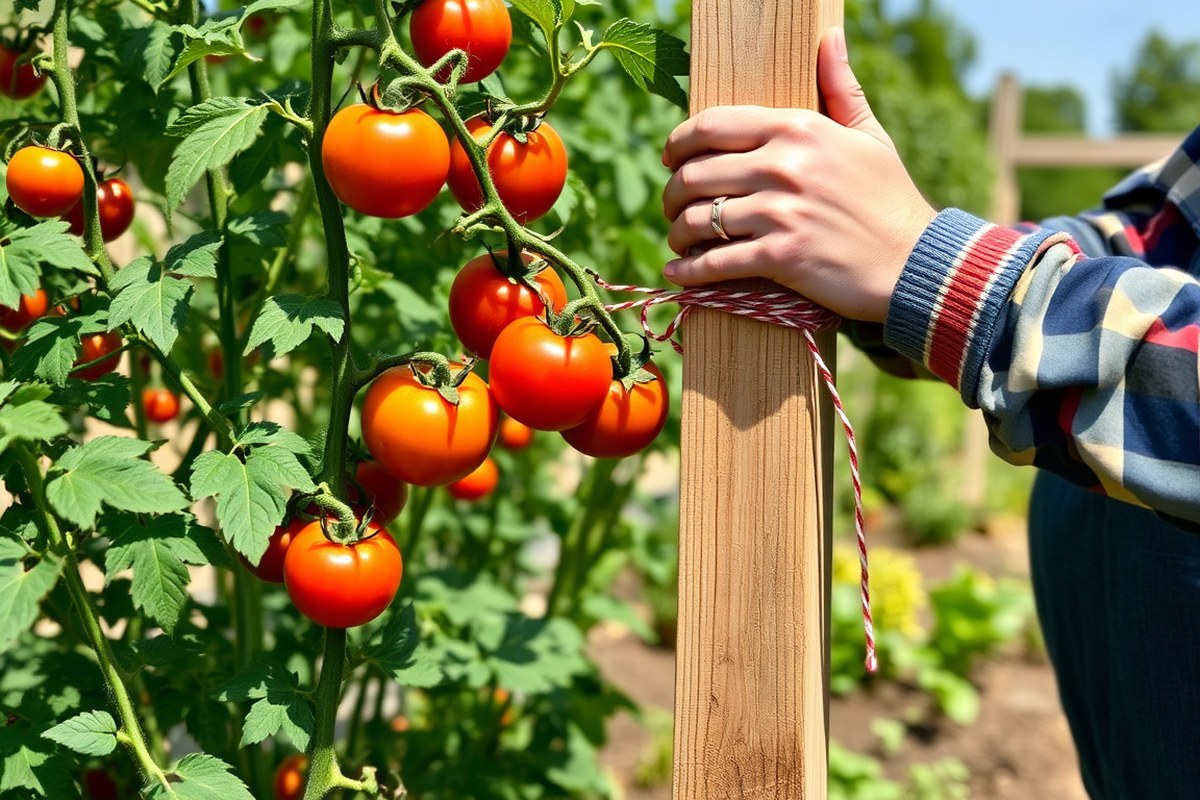
Knowing how to tie up tomato plants keeps them healthy and upright. The right support stops branches from breaking under heavy fruit. Start tying when plants reach 18 to 24 inches tall, focusing on the main stem.
Place stakes or cages early, right after planting, to avoid root damage. Tie the plant every 6 to 8 inches as it grows for steady support. Avoid ties that are too tight, which can harm the stems.
Use soft materials like garden twine or strips of old cloth for tying. These hold the plants gently without cutting into the stems. Always tie loosely to allow stem growth and wind movement.
Check your tomato plants often for stress or damage. Adjust ties as needed to prevent constriction and support new growth. Proper tying improves air circulation and helps prevent diseases.
Key Takeaways
- Set stakes or cages in the ground when transplanting tomato plants.
- Drive stakes about 1 to 2 feet deep, 5 inches from the plant base.
- Tie the main stem first once plants reach 18 to 24 inches tall.
- Secure plants every 6 to 8 inches upward on the stake or cage.
- Add new ties or netting layers as the plant grows another 12 to 18 inches.
- Use soft garden twine or tape to avoid damaging delicate stems.
1. Best Ways to Tie Up Tomato Plants Safely
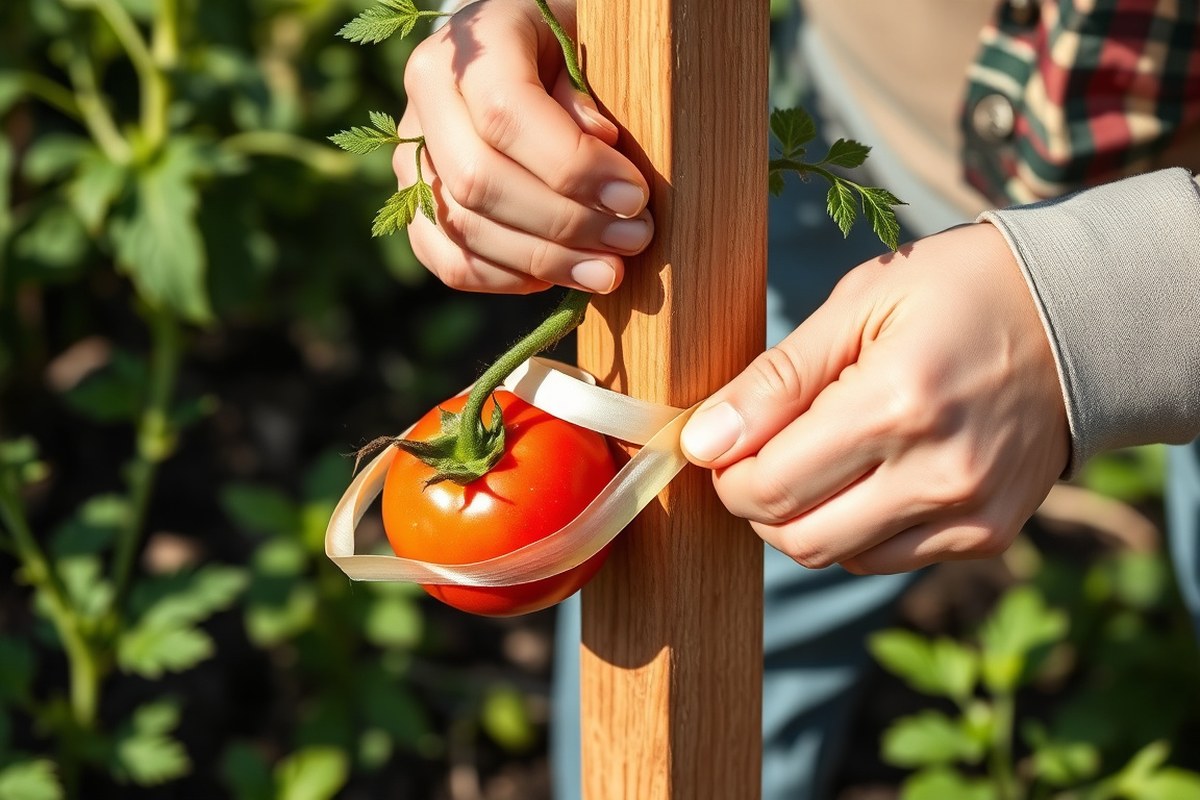
Tying up tomato plants starts with supporting the main stem to keep it upright. Use soft ties to avoid squeezing or cutting into the stems. Tying higher branches can help, but always protect the plant’s movement and growth.
Choose ties that won’t damage stems, like soft cloth strips or plant twist ties. Avoid thin wire or string, which can cut into the plant as it grows. Tie the plants loosely enough to allow some movement but firmly enough to provide support.
Here’s a simple way to tie your tomato plants safely. This method uses the loop technique or figure-eight knot to prevent stem damage. Use these steps once your plants reach about 18 to 24 inches tall:
- Place a tall stake, about 6 to 8 feet high, next to your tomato plant.
- Choose a soft tie like a cloth strip or soft twist tie to protect the stem.
- Tie the main stem to the stake with a loose loop. Leave about one inch of slack. This prevents damage as the plant grows.
- Use a figure-eight knot for extra support. Loop once around the stem and once around the stake. This keeps the plant secure without choking it.
- Add ties every 10 inches along the stem, working your way up as the plant grows.
- Support strong side branches by tying them loosely if they droop or carry heavy fruit.
- Check ties regularly and loosen or adjust them to avoid restricting growth.
Tying the main stem first gives your tomato plant a strong base. Branches can be tied later, especially when heavy with fruit or leaves. Tying too tightly or at only one spot risks damaging the stem or slowing growth.
Remember to tie plants regularly during the growing season. Indeterminate tomatoes keep growing new stems. So ongoing support protects the plant and helps air flow.
Good support stops stems from breaking easily. It also lowers disease risks like blight. Blight happens more in wet, crowded plants.
2. When and How Often to Tie Tomato Plants
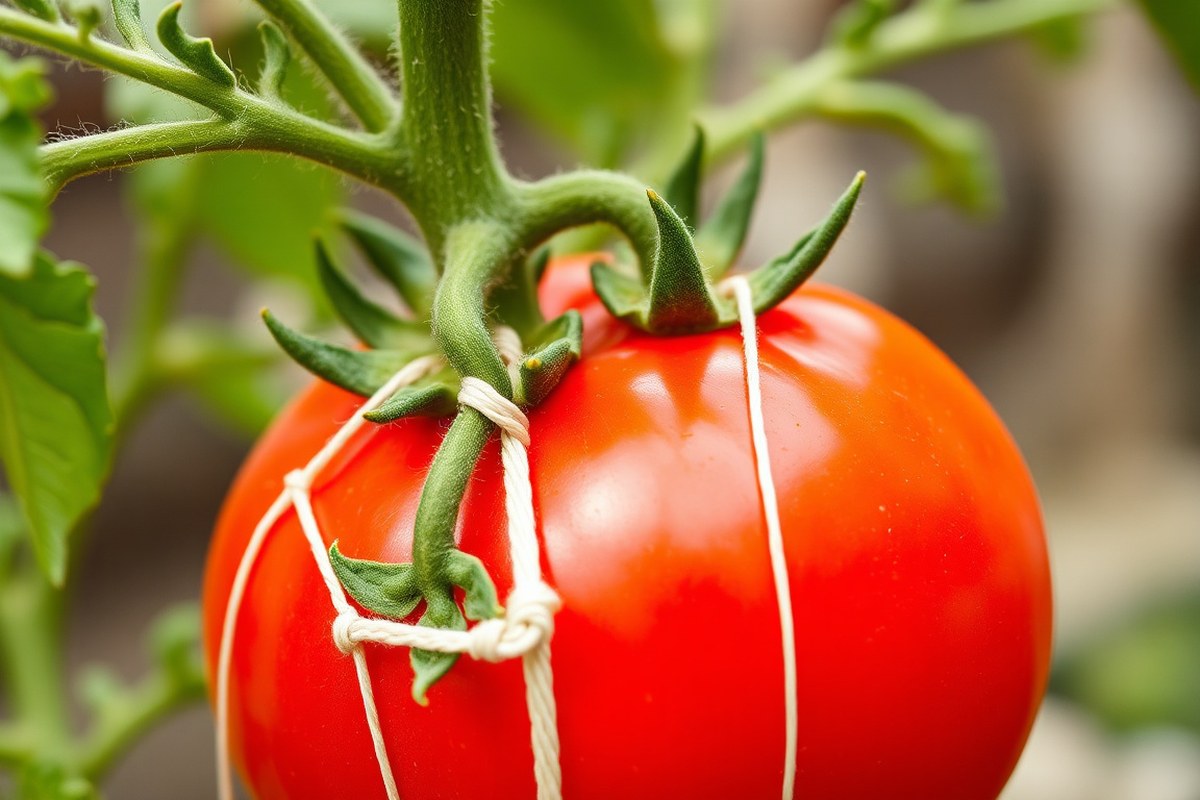
Start tying your tomato plants when they reach about 12 inches tall. At this stage, their stems are still flexible and will benefit from support. Waiting until they are bigger can make tying harder and stunt growth.
Tie your plants regularly as they grow taller, about every 12 to 18 inches. This keeps stems upright and prevents branches from breaking. Indeterminate tomato plants grow over 6 feet tall.
Add ties often during the season to support them. Plan to check and tie regularly for strong stems.
Don’t wait until the plants are very tall. Early and frequent tying helps them grow straight and strong.
Use these steps as a timeline for tying your tomato plants:
- Place stakes or support posts 1 to 2 feet deep when transplanting.
- Begin tying plants when they hit 12 inches tall.
- Add ties every 12 to 18 inches of new growth.
- For plants over 3 feet tall, add extra support with twine or tape.
- Check and tighten ties every two weeks to keep plants secure.
- Adjust ties higher as plants grow beyond 6 feet, especially for indeterminate types.
- Remove old ties to avoid strangling stems as plants thicken.
Tomato plants can grow very tall, over 6 feet. You need to keep adding ties along the stem. This helps the plants stay upright and healthy.
Take one long piece of garden twine and tie it at the stake top. Loop the twine loosely around the main stem about every foot.
This keeps the plant supported without squeezing it. This creates continuous support without cutting into the plant.
Regular attention means your tomato plants stay healthy and fruiting well. Overlooking this step can cause plants to flop or break, risking reduced harvests. Keeping a close eye on growth and tying often is key to success.
3. Comparing Stakes, Cages, Trellises, and Netting
Tomato plants need proper support to grow well and produce fruit. Stakes, cages, trellises, and netting each work for different types of tomatoes and garden setups. Choosing the right support depends on your tomato variety and garden space.
Single Stakes
Single stakes work well for indeterminate tomato plants that grow tall and vine-like. You drive a sturdy stake about 6 to 8 feet deep next to each plant. Then, tie the main stem loosely to the stake.
Use soft fabric strips or twine. Tie every 6 to 8 inches as it grows.
This method costs less and uses less space but requires frequent tying as plants get taller. It’s important to monitor the ties so they don’t cut into the stem. Stakes are simple for small gardens or when you only have a few plants.
Tomato Cages
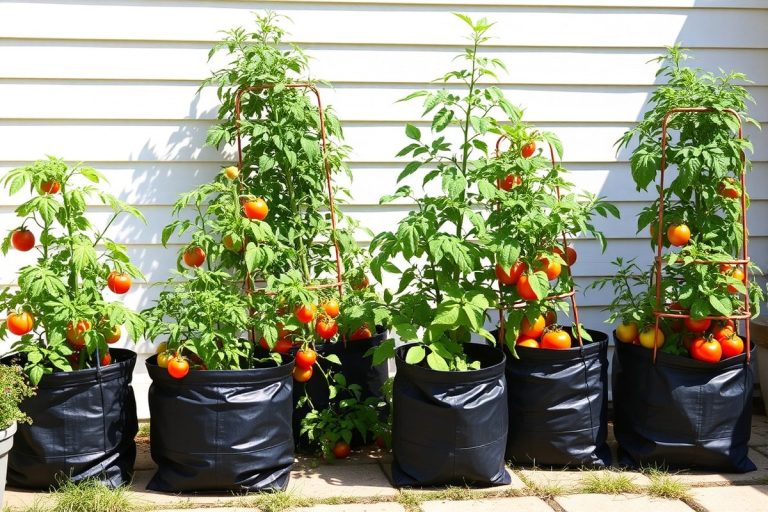
Tomato cages are round or square. They surround the plant. The cage supports branches and fruit.
Most cages are around 18 to 24 inches in diameter and 3 to 5 feet tall. They work best for determinate or bush tomatoes that don’t grow very tall.
Pre-made cages are often too small or flimsy for big indeterminate varieties. Heavy tomatoes can bend or break fragile cages. You don’t need to tie plants often, as branches lean on the cage.
But large plants may still need extra support. Cages are good for small spaces and beginner gardeners.
String Trellises and Mesh Netting
String trellises use stakes or a sturdy frame with horizontal support above the plants. Strong garden twine hangs from the top. Tie each tomato vine to the string.
This keeps vines upright and stable. This method supports tall indeterminate plants well.
It lets air and light reach all parts. This helps plants stay healthy.
Square mesh netting attached to stakes or a frame works similarly. You install a grid of netting above your plants. The tomato vines grow through it.
This method reduces tying because the vines hold themselves up in the netting. Both systems can support many plants in rows and save space.
Here is a quick look at these support options and what suits different tomatoes:
| Support Type | Best for Tomato Type | Space Needed | Cost Range | Tying Required? |
|---|---|---|---|---|
| Single Stakes | Indeterminate (tall vines) | Medium (one per plant) | $1 to $5 per stake | Frequent tying as plant grows |
| Tomato Cages | Determinate (bush types) | Small to medium (around plant) | $10 to $20 each | Minimal tying needed |
| String Trellises | Indeterminate (tall vines) | Medium to large (row support) | $15 to $40 for setup | Moderate tying to strings |
| Mesh Netting | Indeterminate and multiple plants | Large (frame or stakes needed) | $20 to $50+ for netting | Minimal tying, plant grows through net |
For a string trellis, set two sturdy stakes at each end of your tomato row. Attach a horizontal beam or strong wire between them about 6 feet high. Hang garden twine down from the beam to each plant.
Tie the main stem gently around the twine every 6 to 8 inches. This keeps plants upright and easy to harvest. Mesh netting attaches similarly but provides a wide grid to hold many vines at once.
4. Methods to Support Different Tomato Varieties
Different tomato varieties need different support and tying methods because of their size and growth habits. Determinate tomatoes grow to a fixed height and have bushier, more compact shapes. Tomato plants grow well with modest cages, stakes, or Florida weave.
You don’t need heavy pruning to a single leader. This makes care easier for many gardeners.
Indeterminate tomatoes grow taller and keep producing fruit throughout the season. They need taller supports like tall stakes or trellises to hold their long, heavy branches. The Florida weave suits indeterminate tomato types planted in rows.
It supports long vines well. This method keeps plants upright and manageable. It gives them room to grow upward and spill over naturally.
Place strong stakes every few feet on both sides of the row. They need to be stable to hold the plants. This setup forms the base for the weave.
Wrap twine around the stakes, weaving between each plant stem. This holds the stems firmly in place. It prevents plants from falling over.
This method costs less than $10 for twine and stakes. Setup is quick and simple for most gardeners. Expense varies based on twine and stake length.
The Florida weave fits rows of many tomato plants well. It also works in small garden spaces. This makes it popular for home vegetable gardens.
Keep twine loose enough for branch growth and good circulation. Don’t let the plants sag by tying too loosely.
This balance keeps plants healthy. Check the ties every few weeks to adjust as plants grow taller.
Determinate tomatoes don’t usually need the Florida weave because their height is limited. Instead, cages or single stakes with soft ties work best.
Indeterminate varieties can get very tall and heavy early in the growing season. So start tying them up soon after they reach 12 inches tall.
How you tie plants affects air flow around them. It also changes how easy it is to pick tomatoes. Proper tying helps both.
Loose, spaced tying prevents damage like broken branches or fruit rot due to poor airflow. Check supports often and add new ties as branches get heavier.
Tying lower branches keeps plants well supported. Regular checks prevent damage or sagging.
5. Materials and Tools for Tying Tomato Plants
Use soft, flexible materials to tie up tomato plants without hurting them. Good ties support branches firmly but allow some movement. Avoid anything sharp or tight that can cut into stems as plants grow.
Natural Garden Twine and Jute Strings
Natural garden twine and jute strings are popular for tomato plants. They are strong and biodegradable, so you won’t add plastic waste to your garden.
Twist the twine gently to avoid cutting into the stem. Replace ties when they start to tighten.
Bamboo stakes work well with natural twine for steady support. Push stakes 12 inches into the soil near the plant. Tie each branch loosely to the stakes.
Check ties often to avoid damage. This keeps plants upright and safe from wind damage.
Soft Fabric and Stretchable Tape
Cut strips from old cotton t-shirts to make soft ties. These soft ties won’t hurt tomato stems. Use fabric strips for gentle support.
They are stretchy and gentle, letting the tomato grow without restriction. You can wash and reuse these ties for years.
Stretch garden tape is a good store-bought option. It clings gently to stems and supports heavy clusters well. Wrap tape once or twice around the branch and stake or cage.
Keep the tape loose enough to avoid pinching. This prevents stem damage.
Twist Ties and Clips
Soft twist ties with a rubber coating are great for quick, easy tying and retying. They protect stems from damage and can be undone without breaking the plant. Use them to secure branches to stakes, cages, or trellises.
Plastic clips made specifically for plant support also work well. Clips let you attach branches firmly but flexibly and come off without tearing plant tissue. They cost more but save time and protect your tomatoes best.
- Choose soft, stretchable materials to prevent stem damage
- Keep ties loose enough to allow branch growth
- Replace or adjust ties every 1 to 2 weeks as plants grow
- Use bamboo stakes or sturdy supports with natural twine
- Try fabric strips made from old clothes for a DIY option
- Soft twist ties are reusable, easy to apply, and gentle
- Clips save time but can cost more than twine or tape
Always check ties regularly to avoid girdling, tight ties can strangle stems as plants expand.
6. How to Tie Multiple Branches and Heavy Tomato Clusters
Tomato plants with multiple thick branches and heavy fruit clusters need strong but gentle support. Tie each branch separately to avoid stress and breakage. Use soft ties like strips from old t-shirts that stretch and protect the stems.
Don’t tie too tightly because it can cut into the branches and cause damage. Loose ties let the plant sway and grow without choking.
Check your ties throughout the season. As branches grow thicker and heavier, loosen or adjust your ties. Prune extra side shoots to reduce weight where needed.
This helps the main branches carry fruit without snapping. Working a little each day saves time and keeps plants healthy.
- Gather soft, stretchy strips about 1 inch wide, cut from old t-shirts or cloth.
- Start by selecting all main branches and heavy fruit clusters that need support.
- Wrap a strip loosely around each branch and the stake or trellis, leaving space for growth.
- Knot the strip with enough slack so the branch moves slightly but stays upright.
- Repeat for all thick branches and clusters to evenly distribute the weight.
- Check ties every 1 to 2 weeks and loosen or move them as branches grow.
- Prune smaller side branches and suckers to focus energy on heavy fruit loads.
- Tie up additional branches or adjust support daily if you have many plants.
Tying too loosely lets branches flop and can lead to plant damage or fruit rot. Too tight causes cuts or slows growth. The goal is firm support with gentle holding.
Watch for marks or cracks on stems and fix ties right away to avoid stress. This balance helps your tomato plants carry heavy harvests without breaking or falling over.
7. Avoiding Common Mistakes When Tying Tomato Plants
One common error is tying tomato stems too tightly. This can cut into the stem and block water flow. Tie loosely enough to let the stem grow without damage.
Another mistake is tying too far down the plant. This area holds less fruit and leaves, so it doesn’t need much support. Focus ties around the main stem above the lower leaves for better hold and less stress.
Failing to check ties regularly can also cause problems. As the plant grows, ties can become too tight or slip off. Check every week and adjust ties as needed to keep stems secure but free.
- Use soft materials like garden twine or cloth strips to avoid injury
- Wrap ties around both stem and stake, leaving about one-third inch slack
- Place ties a few inches apart along the stem for better balance
- Remove old ties and replace them each time you check the plant
- Keep ties off branches carrying heavy fruit to avoid breakage
Some gardeners tie tomato plants too loosely thinking it’s safer. That causes plants to flop and leaves and fruit to touch the ground.
This invites pests and disease, leading to slow growth and rot. The right fit holds the plant upright but doesn’t squeeze.
Damage to stems often happens when gardeners use wire or zip ties directly on the plant. Use materials with some stretch that won’t cut or bruise the stem.
Don’t twist ties around stems harshly. Instead, loop gently and knot softly to hold but not choke.
Allow room for natural growth by leaving slack and revising ties as stems thicken. Don’t tie too tightly at the start.
Check every 7 to 10 days and loosen or move ties. This keeps support steady as your tomato plant grows tall and strong.
8. Supporting Tomato Plants in Small Spaces and Multiple Plant Rows
Small gardens or containers limit the space to spread out tomato plants. You can tie each plant to its own stake.
Another way is to support several plants at once. That saves space and keeps plants stable in rows.
Florida Weave for Row Plantings
The Florida weave is a popular way to support several tomato plants in a row. It uses stakes and string to hold plants upright and prevent sprawling.
This works well for tight rows of plants. Space them about 18 to 24 inches apart.
Start with stakes placed every two or three plants along the row. Then weave twine horizontally around plants and stakes at intervals as plants grow. This method keeps plants secure and easy to manage without cages.
- Drive stakes into the soil at row ends and between every 2-3 plants.
- Tie a knot around the first stake at about 8 inches off the ground.
- Run twine along the front of plants, looping around each stake.
- Wrap twine around the back row of stakes and return it to the front.
- Pull the twine snug but not tight to avoid cutting stems.
- Repeat this weaving about every 8 inches going up the plants.
- Adjust twine height as the plants grow to keep them supported.
Use soft garden twine to avoid bruising tomato stems while weaving.
Using Trellis or Fencing in Tight Spaces
Trellises or wire fencing let plants grow vertically in cramped spaces or containers. Attach sturdy panels behind plants and secure the tomato stems gently as they climb. This method saves ground space and improves air circulation.
Pick a trellis 5 to 6 feet tall. Put it near but not right at the plant base. Tie the plants to the trellis every 6 to 12 inches.
Use soft ties or old fabric strips. This helps hold fruit-heavy branches up without damage.
Stacking and Grouping Plants for Support
You can group small tomato containers or plants near each other for shared support. Set 3 or 4 poles around the plant group.
Tie them together at the top in a pyramid. Then tie plant stems gently to these poles for stability.
This method works well when space is tight, and plants need extra wind protection. Use wooden or metal poles 4 to 6 feet tall.
Push them firmly into the soil or pots. Keep ties loose enough to allow stem growth but secure enough for support.
Step-by-Step Action Plan
Follow these steps to start tying up your tomato plants the right way. Watch your plants closely as they grow and adjust supports when needed.
- Before planting: Choose your support method, stakes, cages, or trellises, to fit your garden space. Make sure it’s sturdy enough for your tomato variety.
- Week 1 after transplant: Install the supports firmly in the ground. Check that they won’t wobble when you gently push them.
- Week 2: Start tying the main stem to the support. Use soft garden twine or cloth strips for tying. The tie should be snug but not tight enough to squeeze the stem.
- Every 1-2 weeks: Add new ties to branches and heavy fruit clusters as they grow. Use loose loops that allow some movement and plant growth.
- Mid-season: Monitor your plants daily for signs of leaning or drooping. Adjust ties and supports promptly to avoid breakage.
- Before fruit ripening: Remove any ties that are too tight or rubbing the stems. Replace them with ones that give more room as your plant thickens.
- After harvest: Take down supports carefully. Clean and store materials for next season or compost damaged parts.
Frequently Asked Questions
How Tight Should I Tie Tomato Plants to Stakes?
Tie tomato plants loosely to avoid cutting stems. It allows growth and air circulation.
Can I Use Old T-Shirts or Fabric Strips to Tie Tomatoes?
Yes, soft fabric strips work well and won’t harm plants. They stretch a bit as plants grow.
Is It Better to Tie Each Tomato Branch Separately?
Tying main stems tightly and branches loosely is best. This supports growth and prevents damage.
Should I Remove Ties as Tomato Plants Grow Taller?
Yes, check ties often and loosen or adjust as plants grow. This prevents stem constriction and damage.
How Do I Tie Tomato Plants During Windy Weather?
Use flexible, strong ties and check often for loosening. Wind can cause branches to rub or break.
Can I Tie Up Tomato Plants Without Any Stakes or Cages?
Yes, string-trellis methods or garden twine work without stakes. These support vining varieties in tight spots.
Final Thoughts
Tying up your tomato plants well protects them and helps fruit grow better. Start by picking the right support and checking your ties regularly. Watch your plants closely and adjust as they grow to get the best harvest.